|


China : Yúnnán Shěng
5.5 km (3.4 miles) NW of Tangchi, Yunnan, China
Approx. altitude: 2310 m
(7578 ft)
([?] maps: Google MapQuest OpenStreetMap ConfluenceNavigator)
Antipode: 25°S 77°W
Accuracy: 5 m (16 ft)
Quality: good
Click on any of the images for the full-sized picture.
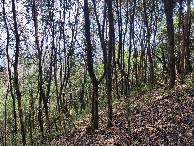
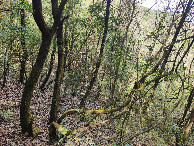
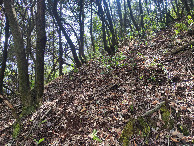
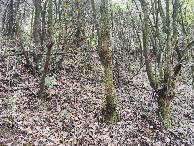
| 25°N 103°E (visit #3) |
![Visit #1: [18-Nov-01]](/cn/all/n25e103/preview.jpg "Visit #1: [18-Nov-01]")
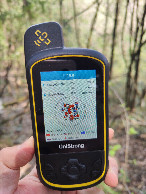
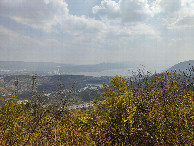
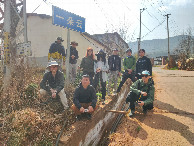
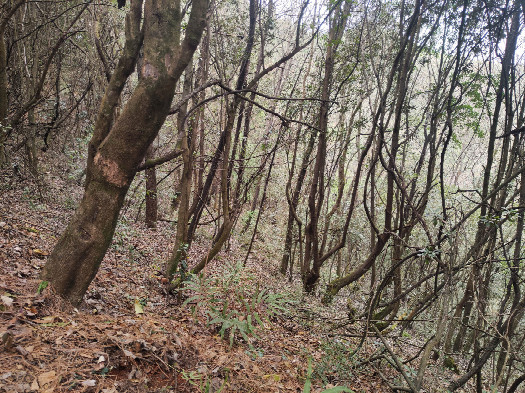 (visited by Xinhao Cheng, Qingxing Lan, Yuetong Ma, Jin Tao, Leiming Zhao, Xiaofu Wang, Jiaxi Su, Fei Luo, Qian Han and Hua Zhang) 28-Feb-2026 -- Kiss a Cloud: A Visit to 25°N 103°E According to a DCP report from 25 years ago, previous visitors reached 25°N 103°E by climbing from the villages in the Yangzonghai Basin (阳宗海盆地). We, however, planned to approach from the "back" of the mountain: starting from the Qidian Plain (七甸坝子), passing through a mountain valley wedged between two ridges, cresting the summit, and then descending to the point. At 9:30 AM, our group of ten met and headed northeast along a road into the valley. The path meandered upward, and the valley gradually opened to reveal vast fields of red soil along the gentle slopes—the weathered remnants of Yunnan’s oldest geological strata. A thick mantle of red earth covered the hills as far as the eye could see, with almost no rocky outcrops, replaced instead by lush vegetation. At the highest point of the northwestern ridge, a tower-like structure peeked through. After some debate over whether it was a "Fengshui Tower" (风水塔), we realized it was simply a fire lookout station. Behind this ridge lies the source of the Baoxiang River (宝象河), one of the main arteries flowing through Kunming, once vital for irrigation and transport on the eastern shore of Lake Dianchi (滇池). In fact, our route today cut right along the watershed divide between the Yangtze (长江) and Pearl River (珠江) basins: the Baoxiang River flows north behind the ridge into Lake Dianchi and eventually the Yangtze; while the small stream in our valley flows into Yangzonghai Lake, eventually joining the Nanpan River (南盘江)—the upper reaches of the Pearl River. A few kilometers in, the road led us to the largest village in the valley, which bears the magical name: "A Cloud" (Yiduoyun, 一朵云). We had spotted this unique name on the map before arriving. We were all curious: why would this Yi (彝族) ethnic village have such a romantic name? Is it because of its high altitude, placing it closer to the clouds? Or—more likely—is it a Chinese phonetic adaptation of a Yi language toponym? Just as our starting point, "Qidian" (七甸), actually comes from the Yi word "Cidian" (雌甸, meaning a flat plain for sheep), could "A Cloud" follow a similar logic? In the Yi language, "yi" means water, "duo" likely means a bend or curve, and "yun/yin" might refer to the space between two mountains or two bodies of water. Could "A Cloud" actually mean "a winding stream between two mountains"? This perfectly matches the local topography, but confirmation requires local knowledge. I spotted an elderly man sunning himself in front of a small store and asked, "Why is your village named this way?" He just smiled and said, "I don’t know." Later, the same answer was echoed by farmers working in the fields. Perhaps our question is destined to remain just that. The sun was fierce, and the wind whirled dust into the air as the terrain continued to rise slowly. The roads became intermittent. We were forced to trek through a forest and across terraced fields on a slope until we found a viable path again. To our surprise, a tractor road, though winding, led us all the way to a mountain pass on the ridge. The GPS showed we were only 700 meters away from 25°N 103°E. After crossing the pass, we entered a dense forest on a steep slope. The path was better than I imagined—it was almost an old caravan road, wide enough for two people to walk abreast. The path pointed almost directly toward the confluence. I watched the distance countdown until it hovered around 10 meters. At that moment, the coordinates read 24.999°N 102.999°E. We left the path, clinging to trees, and descended the slope to the northeast until the GPS finally flashed five zeros after the decimal point. We were on a lushly forested slope covered in a thick layer of fallen leaves. There was unexpectedly little underbrush, making the final ten meters of movement less difficult than anticipated. A tree stood exactly at the confluence point. Su Jiaxi (苏家喜), one of our members, picked up a pine cone and placed it on a branch about a meter above the ground—a subtle marker, almost invisible to the casual observer. We could sense the Yangzonghai Basin (阳宗海坝子) behind the trees, but our view was completely obscured by the forest. We sat on the slope and by the path to rest, listening to the sound of the wind brushing through the canopy. Next came a rapid descent along a small trail, leading us to our final destination. Emerging from the woods near the ridgeline, the waters of Yangzonghai Lake, which we had only imagined earlier, finally unfurled before our eyes. Simultaneously, a series of winding, parallel curves appeared: the San-Qing Expressway (三清高速), perched almost entirely on massive concrete piers mid-mountain; the G324 National Highway (G324国道) cutting through the valley; the Nanning-Kunming Railway (南昆铁路), built at the end of the last century, where freight trains still rumble through with frequent whistles; and finally, the oldest stratum—the Yunnan-Vietnam Railway (滇越铁路), built by French colonists over a hundred years ago, stretching toward Vietnam. This railway represented the earliest abstract measurement of the Yunnanese landscape, echoing across a century with the GPS technology we use today. Thus, in this journey, we traversed water systems, traversed semantics, traversed the mountain folds of Yunnan, and pierced through a hundred years of history. |
| All pictures |
| #1: the general area #2: east view #3: north view #4: south view #5: west view #6: GPS view #7: Yangzong lake view from the hillside #8: KISS group at A Cloud ALL: All pictures on one page |