|


China : Anhui Sheng
3.9 km (2.4 miles) ENE of Lixinji, Anhui, China
Approx. altitude: 62 m
(203 ft)
([?] maps: Google MapQuest OpenStreetMap ConfluenceNavigator)
Antipode: 32°S 63°W
Accuracy: 20 m (65 ft)
Quality: good
Click on any of the images for the full-sized picture.
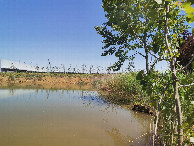
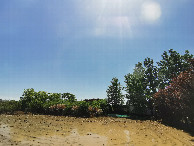
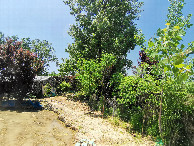
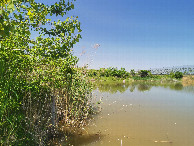
| 32°N 117°E (visit #4) |
![Visit #3: [25-Jan-06]](/cn/all/n32e117v3/preview.jpg "Visit #3: [25-Jan-06]")
![Visit #2: [05-Aug-05]](/cn/all/n32e117v2/preview.jpg "Visit #2: [05-Aug-05]")
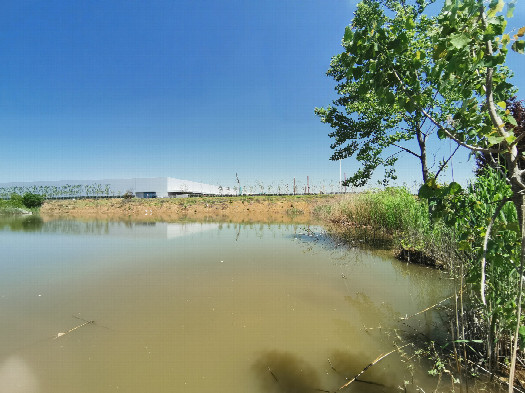 (visited by Arrobo) 04-May-2026 -- 关于这个坐标点的故事,说来话有点长。 我是一个在合肥上大学的学生,每个学期都会在合肥与家之间往返。有一次,我偶然间看到,合肥新桥机场的基准点(ARP)坐标是31°59.2′N 116°58.5′E。我注意到这个位置距离32°N 117°E是如此近 ,那个时候我就有了要探索一下这个坐标点的想法。 今年五一节放假前夕,我看到了一个网友关于30°N 120°E的访问记录,偶然间发现了这个网站。这个网站的发现,让我意识到世界上还有这么一群人,他们访问全球所有整数纬度与整数经度的交点,在每个地点拍照并写下文字记录,让这些坐标点变成一份可持续累积的地理样本库,同时他们也会回访同一地点,以记录这些地点随时间的变化。于是,我找到了这个坐标点的两条访问记录,然而我发现最近的一条访问记录距离现在也有20年了。既然我有探索这个坐标点的兴趣,又看到了这个点20年之前的样子,我就更想去看一看,在20年之后写这篇文章的今天,这个点到底是什么样子。 我在Maptiler上查到了这个点大概的位置信息,发现这个点就在新淮大道的路边。然而转到卫星图的时候,卫星图却给了我当头一棒。20年前的访问记录说,这个点在眠虎集村的一个水塘里面,没想到卫星图上显示,这个地方仍然在那个水塘里面。我又想到,通常情况下,这个卫星图通常是两三年前的图,按照中国目前的基建速度,没准这条路已经建完了呢。但是这个地点目前到底是在路边,还是在水塘里,只有我去了才能知道。 时间到了劳动节放假,家长刚好开车来学校看我。我向他们提出了这个请求,他们欣然答应把车借给我一天,让我去到这个地点,去看一看这个地方现在到底变成什么样了。我用Maptiler的卫星图与百度地图的卫星图做好对照,在百度地图上加了星标点。在5月4日上午大约10:50的时候,我就开着导航,向这个点驶去。 我驾车沿长江西路向西,然后转向机场高速向北,从机场互通,转向长兴大道向东,转向机场东路向北,转向龙嘉路向东。直到我看到了龙嘉路与新淮大道的交叉口往目标点的方向有铁皮拦住,才发现原来这一段路还没有修好。导航让我走进一个厂区的内部,它好像认为目前距离这个点最近的位置应该就是在那个厂区里面,于是我就把这个导航关掉,又看了一下这个附近的卫星地图。我尝试从雄安路往眠虎集村最大的进村道进入,但是发现这条进村道往北走一点点就到了一个工厂的大门;我也尝试了从雄安路与新淮大道交叉口向北走,直接走入新淮大道未开放的部分,但是最终走到了一个采石场,就无路可走。我最终拐回了机场东路,转向白塔路向东,在与白云路的交叉口发现了一条小路,走了进去。我再一次拿出导航,只不过这次转成了骑行模式,我跟着导航,顺着小路走到了导航的终点,我便把车在这附近停了下来,路两边杂草丛生。 我在这附近走了一段距离,发现了一条南北走向的、杂草似乎被清过的土地,我的直觉告诉我这就应该是将来新淮大道的路基。我打开了手机的直接获取位置信息的软件,这个软件告诉我,现在离117°E经线只有不到十几米的距离,而离32°N纬线还稍微有一点点距离,需要向北才能到。我便锁上了车门,沿着这条将来的新淮大道向北。最终,不出意外的,我来到了那片水塘边上。果然,那个坐标点目前还在水塘里面。 由于我没有携带涉水的装备,不敢强行涉水,只敢站在水塘边,顺着水塘的外缘走到距离坐标点相对较近的位置。最终我在31.999873°N 116.999701°E停了下来,时间是中午12:44。定位软件显示海拔51.9米,水平精度4米,根据计算,这个点距离预定的坐标点32°N 117°E直线距离大约15~16米,再加上定位软件的水平精度4米,因此这次探索的精确度大约为20米。随后我向坐标点的方向(东北)拍摄了图1,又向正东、正南、正西、正北4个方向拍摄了图2到图5。 西北方向的眠虎集村已经拆迁完了,现在站在交叉点上,除了茂密的植被之外已经什么都看不见了。东边已经盖起了一个工厂,就是从上文所说的的进村道向北走一点点就到的那个工厂。如果从现在的地图上看的话,这个点的西边远处也有一个工厂,属于蔚来汽车公司,叫做蔚来先进制造新桥二工厂,据说里面有一个体验中心,但是我没有进去看。说回到这个水塘来,这个水塘要比20年之前小了许多,但是水岸也长出了许多芦苇,使得视野也窄了一些,我感觉是因为这边村子已经拆光了,已经没有人管这片水塘了所导致的。 我又猛然看向这里的地图,既然地图上已经标上了道路,那么我估计,最短在今年年内,最长在几年的时间内,这几年这片水塘就会被填平,然后变成修路的工地。这个时候这个点就应该没有办法正常访问了。等再过一段时间,修完路,那么访问这个点应该会变得异常的容易,只需要靠边停车就可以了,因为以后这个交叉点就在路上或者是路边。我想,以后这个点也许会像40°N 116°E的北京原点公园那样,搞一个“安徽原点公园”出来,毕竟OpenStreetMap的“安徽省”注记就标在了这里。以后这个地方会变成什么样子,那就留给后人们亲自去看吧。我还有一年多,大学就毕业了,毕业了过后到哪里去,现在还是个未知数呢。 我没有在此地做过多的停留。13:00左右,我就驱车前往大蜀山。在那里玩了一个下午之后,把车开回旅店,与父母共进晚餐。然后我就回到了学校,开始整理照片,并写下这段文字。 以上就是关于这次探索坐标点的全部。 04-May-2026 -- The story about this confluence is quite long. I am a student attending university in Hefei, and I commute between Hefei and my home every semester. One day, I stumbled upon the fact that the reference point(ARP) coordinates for Hefei Xinqiao International Airport are 31°59.2′N 116°58.5′E. I noticed that this location is so close to 32°N 117°E, and at that moment, I had the idea to explore this confluence. On the eve of this year's May Day holiday, I came across a visit record by a netizen regarding 30°N 120°E, which led me to discover this website by chance. The discovery of this website made me realize that there is such a group of people in the world who visit all the intersections of integer latitudes and integer longitudes around the world, take photos at each location, and write down written records, turning these coordinate points into a continuously accumulating geographical sample library. Besides, they also revisit the same locations to record the changes over time. So, I found two visit records for this coordinate point, but I noticed that the most recent one was 20 years ago. Since I have an interest in exploring this coordinate point, and have seen what it looked like 20 years ago, I became even more eager to visit it and see what it looks like today, 20 years later from last record, as I write this article. I found the approximate location information of this point on Maptiler and discovered that it is located on the side of Xinhuai Blvd.. However, when I switched to the satellite image, it gave me a shock. The access record from 20 years ago stated that this point was located in a pond in Mianhuji Village, and I never expected the satellite image to show that this place was still in that pond. I then thought that, under normal circumstances, a satellite image is usually from two to three years ago. Given China's current pace of infrastructure development, perhaps this road has already been completed. But whether this location is currently on the side of the road or in the pond, only by going there can I find out. When the May Day holiday arrived, my parents happened to drive by the school to visit me. They kindly agreed to lend me their car for a day, allowing me to go to this Confluence and see what it had become. I compared the satellite images from Maptiler with those from Baidu Map, and added star markers on Baidu Map. At around 10:50 on the morning of May 4th, I drove to this point with navigation. I drove west along Changjiang West Road, then turned north onto the Airport Expressway. From the Airport Interchange, I turned east onto Changxing Blvd., then north onto Airport East Road, and finally east onto Longjia Road. It was only when I saw a metal barrier blocking the crossing of Longjia Road and Xinhuai Blvd. towards my destination that I realized this section of the road was still under construction. The navigation system directed me into the interior of a factory area, as if it thought the nearest location to the point was inside that factory. So, I turned off the navigation and checked the satellite map nearby. I tried to enter the village from Xiong'an Road via the largest entrance road to Mianhuji Village, but found that this entrance road led to another factory gate after going a little northward. I also tried heading north from the crossing of Xiong'an Road and Xinhuai Blvd., directly entering the unopened part of Xinhuai Blvd., but ended up at a quarry with no way out. I eventually turned back onto Airport East Road, then east onto Baita Road, and found a small road at the crossing with Baiyun Road. I followed the cycling navigation and drove along the small road to the end point. I then parked my car near the "destination", with weeds growing on both sides of the road. I walked around the area for a while and found a strip of land running north-south, where the weeds seemed to have been cleared. My intuition told me that this should be the future roadbed of Xinhuai Blvd.. I opened the software on my phone that directly accesses location information. The software told me that I was now less than ten meters away from the 117°E meridian, and there was still a slight distance to the 32°N latitude line, which required me to head north. So, I locked the car door and headed north along this future Xinhuai Blvd.. Eventually, as expected, I arrived at the edge of the pond. Indeed, the coordinate point was currently still inside the pond. As I didn't bring any wading equipment, I didn't dare to force my way through the water. I only dared to stand by the pond and walk along its outer edge to a position relatively close to the coordinate point. Eventually, I stopped at 31.999873°N 116.999701°E at 12:44. The positioning software showed an altitude of 51.9 meters and a horizontal accuracy of 4 meters. According to calculations, this point is approximately 15~16 meters away from the predetermined coordinate point at 32°N 117°E in a straight line. Adding the horizontal accuracy of 4 meters from the positioning software, the accuracy of this exploration is approximately 20 meters. Then, I took Photo 1 towards the direction of the coordinate point (northeast), and took Photos 2~5 towards the four directions: due east, due south, due west, and due north. The village of Mianhuji in the northwest has been completely demolished. Now, standing at the point, apart from the dense vegetation, nothing else can be seen. A factory has been built in the east, just a bit north of the village's entrance road from Xiong'an Road, which was mentioned earlier. If you look at the current map, there is also a factory to the west of this point, belonging to NIO Automobile Company and called NIO Advanced Manufacturing Xinqiao Second Factory. It is said that there is an experience center inside, but I didn't go in to see it. Coming back to this pond, it is much smaller than it was 20 years ago, but many reeds have grown on the water bank, narrowing the view. I feel that this is because the village has been completely demolished and no one takes care of this pond anymore. I suddenly looked at the map here again. Since roads have been marked on the map, I estimate that within the shortest timeframe of this year, and at the longest within a few years, this pond will be filled in and turned into a road construction site. At that time, this confluence should be inaccessible normally. After some time, when the road is completed, accessing this confluence should become extremely easy, just by pulling over to the side of the road, because this confluence will be on the road or by the roadside. I think that in the future, this point might be transformed into an "Anhui Origin Park," similar to the Beijing Origin Park at 40°N 116°E, since the OpenStreetMap mark "Anhui Province" as located here. As for what this place will look like in the future, I'll leave it to future generations to see for themselves. I still have a bit more than one year before I graduate from university, and where I will go after graduation is still unknown. I didn't linger here for long. Around 13:00, I drove to Dashushan Mountain. After spending an afternoon there, I drove back to the hotel for dinner with my parents. Then I returned to school, started organizing photos, and wrote this text. That's all about the exploration of this confluence. |
| All pictures |
| #1: View Northeast - Panoramic view of the confluence #2: View East #3: View South #4: View West #5: View North #6: GPS ALL: All pictures on one page |